White salt flats stretch farther than a wide‑angle lens can see, evoking the raw beauty that shapes our attitudes toward wilderness and remote landscapes. Sand dunes glow like molten gold at sunrise. Cracked earth, jagged ridges, and distant peaks frame a valley that is the hottest, driest, and lowest national park in the lower 48. For anyone who loves a camera, this is not just another stop. This is one of the most iconic road trips through Death Valley and the wider American Southwest.
Instead of crowded sidewalks and neon noise, picture leaving the Las Vegas Strip behind and trading it for empty desert highways, surreal salt patterns, and night skies so dark the Milky Way looks painted on. A Death Valley road trip feels like pure freedom for content creators. There are endless spots for photos, reels, long‑form video, or that one hero shot that makes your feed stand out from the usual tourist snaps.
The real magic comes when the trip is self‑guided. No bus schedule, no guide rushing the group back into a van. Just keys, coordinates, and the time to wait for perfect golden‑hour glow at Badwater Basin, to run barefoot along cool sand at Mesquite Flat at dawn, or to shoot a time‑lapse from Zabriskie Point into the stars. With Discover It Yourself, that is exactly the idea. You get premium 4×4 vehicles plus curated GPS points for both headline locations and quiet corners most visitors never reach.
Keep reading to map out a complete Death Valley itinerary, from the first miles out of the city to Badwater Basin, Artist’s Drive, Ubehebe Crater, Rhyolite Ghost Town, and more. By the end, you will have a clear plan for turning this California desert road trip into a standout project, with the freedom and privacy to create on your own terms.
“You don’t take a photograph, you make it.”
— Ansel Adams
Key Takeaways
- Best Season: October through April brings safer temperatures for long shooting days. Light is softer, heat is manageable, and sunrise or sunset sessions are easier to enjoy. Late winter and early spring can even bring wildflower carpets after wet seasons.
- Vehicle Choice: A standard car works for the main Death Valley National Park drive, including the famous paved stops. A high‑clearance 4×4 opens remote tracks, dry lakebeds, and seldom‑visited canyons that often become your most original content spots.
- Self‑Guided Freedom: Exploring on your own schedule means you can skip harsh midday light, come back when shadows look better, and avoid crowds by circling back later. That flexibility helps your project feel intentional instead of rushed.
- Easy Access From Las Vegas: Death Valley sits about two hours from the Strip, perfect for a weekend or multi‑day content sprint. Extra time lets you mix daytime drives, blue‑hour filming, and astrophotography. With smart planning, one trip can fuel weeks of posts.
- Why Discover It Yourself: Discover It Yourself removes guesswork while keeping you independent. You get premium 4×4 vehicles plus secret, GPS‑based locations to stack your route with both must‑see icons and quiet, hidden scenes. That blend of support and freedom fits creators who want standout work instead of copy‑and‑paste shots.
Planning Your Death Valley Road Trip Adventure
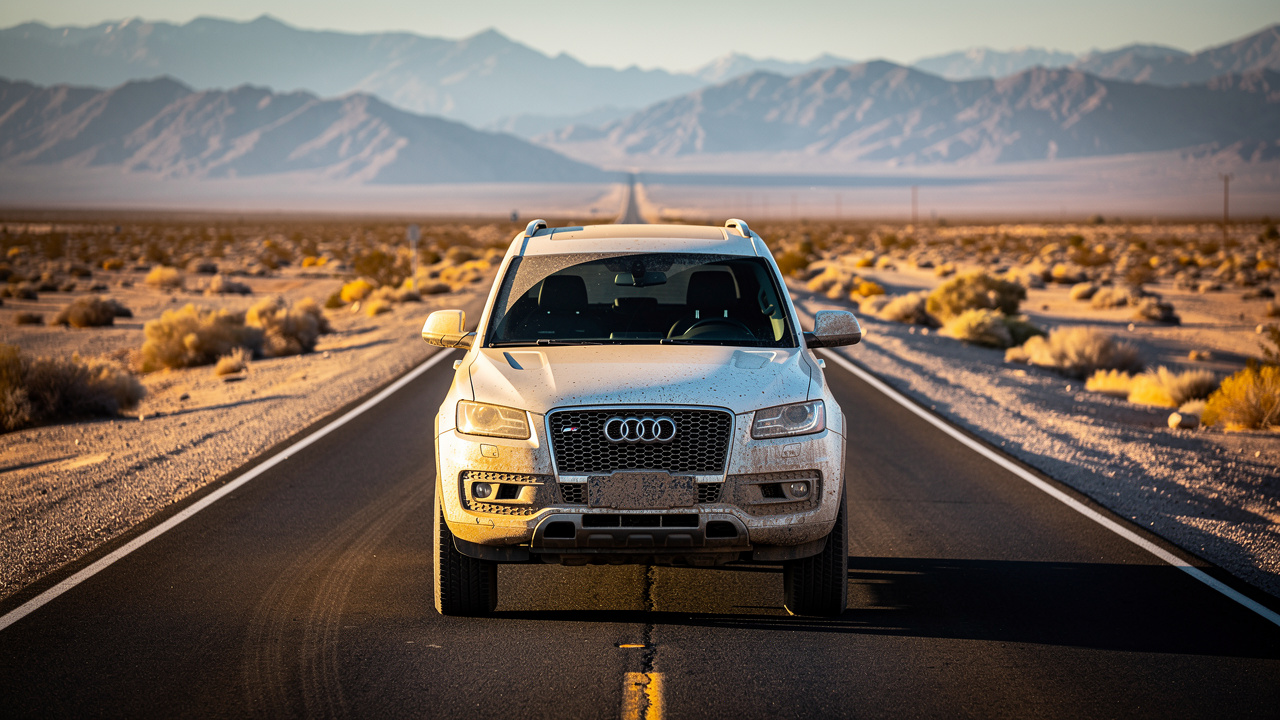
Good planning turns Death Valley from a quick sightseeing stop into one of those iconic road trips where almost every stop is usable content. The first big decision is timing.
From October through April, daytime highs usually sit in the 60s to low 80s Fahrenheit. That range lets you shoot, hike, and scout without risking your health, especially if you pace yourself and drink plenty of water. Early spring, especially March and April, adds a bonus: in years with strong autumn and winter rain, the desert floor can burst into color with wildflower “superblooms.” For creators, that contrast between bright flowers and harsh desert textures looks incredible on both photo and video.
From May through September, heat is on a different level. It is not just “hot.” Afternoon temperatures often climb above 120°F, which shrinks safe outdoor shooting down to dawn and dusk. Midday hikes or extended filming during that season can be dangerous, so most people keep activities short and stay near their vehicle or lodging.
Vehicle choice shapes the kind of Death Valley road trip you can build:
- A typical sedan or crossover can handle the main scenic drive and big paved stops such as Badwater Basin, Zabriskie Point, Mesquite Flat Sand Dunes, and Artist’s Drive.
- If your goal is a broader American Southwest road trip with more remote set‑ups, a high‑clearance 4×4 opens the door to rougher tracks, including places like the Racetrack Playa and Titus Canyon.
That is exactly where Discover It Yourself stands out, with premium 4×4 vehicles prepared for these conditions and routes designed with real‑world filming in mind.
Packing should cover both safety and content:
- At least one gallon of water per person per day, more if hiking or filming in exposed areas
- Wide‑brimmed hat, strong sunscreen, UV‑blocking sunglasses, and light, breathable clothing
- Sturdy shoes for sharp rock and deep sand, plus a warm layer for cool nights
- Offline maps on your phone and a paper map for backup, since cell service is limited
- Spare camera batteries, empty memory cards, a solid tripod, and a simple cleaning kit for dust and salt
- A small cooler with snacks so you can stay in the field longer without returning to town
Fuel up completely before entering the park, since gas at Furnace Creek, Stovepipe Wells, and Panamint Springs costs more and stations are far apart. When logistics are nailed down early, you can focus on framing, light, and story instead of worrying about where to sleep or how far the remaining gas will take you.
Where To Stay: Base Camps For Your Death Valley Adventure
Choosing a base is not just about comfort. It directly shapes how easily you can chase sunrise, sunset, and stars. Staying inside the park means rolling out of bed and reaching Zabriskie Point or the Mesquite Flat Sand Dunes in minutes, not hours. For creators, that can be the difference between catching first light and arriving after the best color fades.
At Furnace Creek, The Oasis at Death Valley gives two very different moods:
- The Inn at Death Valley is a 4‑diamond historic hideaway with palm trees, spring‑fed pools, and a calm setting that works well when you need a quiet room to edit or upload.
- The Ranch at Death Valley feels more relaxed and family‑oriented, with open grounds and easier price points.
Both offer reliable power, Wi‑Fi, and air‑conditioning, which makes long editing nights far more manageable after a hot Death Valley National Park drive.
For a more stripped‑back stay, Stovepipe Wells Village Hotel sits close to the Mesquite Flat Sand Dunes. That spot is ideal if you want sunrise and sunset dune sessions without long drives on either side. On the western edge of the park, Panamint Springs Motel & Tents offers a small, remote outpost feel. The views are big, the services basic but welcoming, and the night sky is outstanding.
Camping turns the trip into a full immersion. Furnace Creek and Stovepipe Wells campgrounds keep you central to most Death Valley must‑see stops while dropping you right under a Gold Tier Dark Sky. That means Milky Way arcs over the tent, star trails above silhouetted ridges, and the chance to start shooting within steps of your sleeping bag. If you are building astrophotography into a desert road trip USA project, this is hard to beat.
If budget, variety, or extra amenities matter more, gateway towns work well:
- Beatty, Nevada – quick access to the park’s east side plus simple motels, food, and gas
- Lone Pine, California – near Highway 395 with jaw‑dropping views of the Alabama Hills and Mount Whitney
- Death Valley Junction – home to the historic Amargosa Opera House & Hotel with a slightly surreal, old‑West atmosphere
Wherever you choose, book early for peak months, especially March and April, when both wildflowers and mild weather attract more visitors.
The Drive To Death Valley: Key Stops Along The Way
For many creators, the drive in becomes as important as the main Death Valley road trip itself. Instead of racing straight to Furnace Creek, treating the approach as part of the adventure adds more variety to your project. Each extra stop gives a fresh setting, new colors, and different textures for your feed or video timeline.
Coming from Los Angeles on CA‑14, the first standout stop is Vasquez Rocks Natural Area Park near Agua Dulce. Its sharp, tilted rock fins are instantly recognizable from classic films and TV, from Star Trek to modern sci‑fi. The shapes are perfect for forced‑perspective shots, character portraits, or fun short‑form skits. Because the formations rise right from the parking area, this can be a quick content grab or a longer scouting walk.
Farther north, Saddleback Butte State Park brings in groves of Joshua trees and wide views over the Antelope Valley. Even a brief stop near the visitor center can yield strong images, especially if scattered clouds throw moving shadows across the desert floor. If time and energy allow, the hike to the summit offers a 360‑degree view that sets up sweeping wide‑angle compositions, even if you are only shooting from the ground.
Red Rock Canyon State Park, farther along, feels like a preview of Death Valley’s colorful cliffs. Striped red and white walls tower over the road, and formations with names like Turk’s Turban and Camel Rock give easy focal points. This section of the route works nicely for car‑based content too, especially if you want to show your rig framed against bold rock bands.
Approaching from the west on Highway 395, consider detouring to the Trona Pinnacles. More than 500 tufa spires rise from a dry lakebed, some 140 feet tall, creating an eerie, almost alien setting that fits cinematic B‑roll or fashion shoots. The five‑mile access road is rough and unpaved, so a high‑clearance vehicle is helpful, which is where a Discover It Yourself 4×4 really pays off.
Near Lone Pine, the Alabama Hills deliver rounded, golden rock piles backed by the jagged crest of the Sierra Nevada. Iconic dirt roads lead straight toward Mount Whitney, ideal for symmetrical car shots, walking clips, or low‑angle footage captured with a gimbal. Short walks to arches like Mobius Arch and Boot Arch give natural frames for sunrise or sunset. If time allows, driving up Whitney Portal Road adds cool, tree‑lined switchbacks and alpine scenes that contrast sharply with the desert below. By the time you roll east toward Death Valley, you will already have a rich mix of settings on your cards.
Death Valley’s Iconic Valley Floor Attractions
Once you drop onto the main valley floor, the scale hits hard. This central zone holds some of the most famous scenes in any California national park road trip, and it is where you can build entire days of shooting without driving far.
Badwater Basin is the headliner. At 282 feet below sea level, it is the lowest point in North America and a core stop on almost every Death Valley itinerary. From the parking lot, a boardwalk gives a first glimpse of the salt flats, but the real magic sits farther out. Walking 15 to 20 minutes brings you to untouched hexagonal salt patterns that stretch to the horizon. Ultra‑wide compositions, overhead shots, tiny‑subject‑in‑a‑big‑world frames, and playful perspective tricks all work brilliantly here.
Heat and glare are serious, though. The white ground reflects sunlight straight back at you, so strong sunglasses, sunscreen, and plenty of water are not optional. In summer, afternoon ground temperatures can climb far higher than the air reading, which makes midday visits dangerous. Aim for early morning or late evening, when the sun sits low and salt textures stand out in side light.
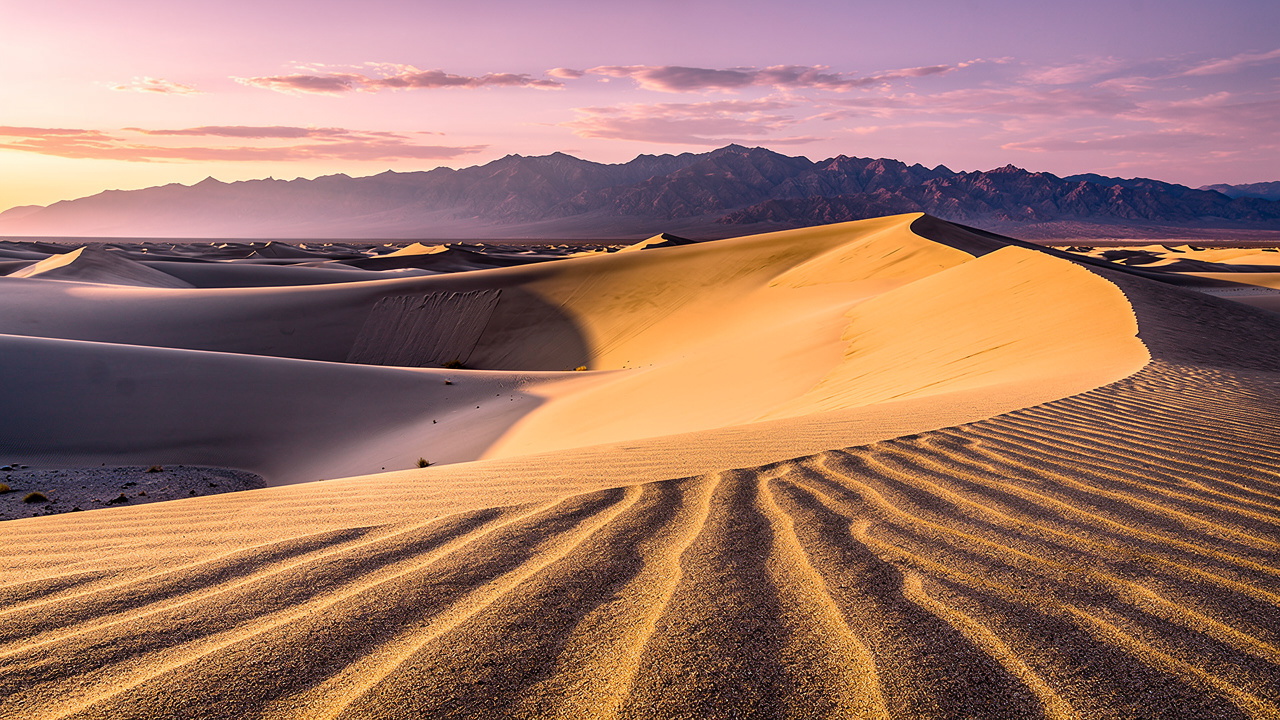
North of Furnace Creek, near Stovepipe Wells, the Mesquite Flat Sand Dunes create a sea of curves and ridges. The tallest dunes rise about 100 feet, but what matters most is the light. At sunrise and sunset, every ridge casts a crisp shadow, turning the dunes into patterns of gold and deep blue‑gray. For clean, footprint‑free scenes, expect to hike 30 to 60 minutes out into the field. Walking in loose sand feels harder than the distance suggests, so plan snacks, water, and extra time.
Harmony Borax Works, close to Furnace Creek, adds human history to your Death Valley travel guide. Crumbling adobe walls, rusted equipment, and a preserved 20‑mule team wagon tell the story of borax mining in the 1880s. Short interpretive signs help you understand what you are seeing, which makes it easy to script voice‑overs, captions, or educational reels. Mixed with wide shots of the nearby valley, it adds context and character to a reel of pure desert scenes.
Together, these valley floor locations form the core of many Death Valley scenic routes. The creative challenge is not finding subjects; it is pushing yourself to try unusual angles: tight salt‑crystal details, reflections in rare rain pools, footprints as leading lines, or silhouettes against glowing dunes. Staying longer than the average visitor, and coming back in different light, often leads to your strongest work from the trip.
Death Valley’s Spectacular Scenic Drives And Colorful Canyons
Some of Death Valley’s best content comes straight out of the car window. The park’s paved drives and short hikes give fast access to bright color and tight canyons without demanding full‑day treks. That mix is perfect if your plan is to cover several themes in one tight Death Valley itinerary.
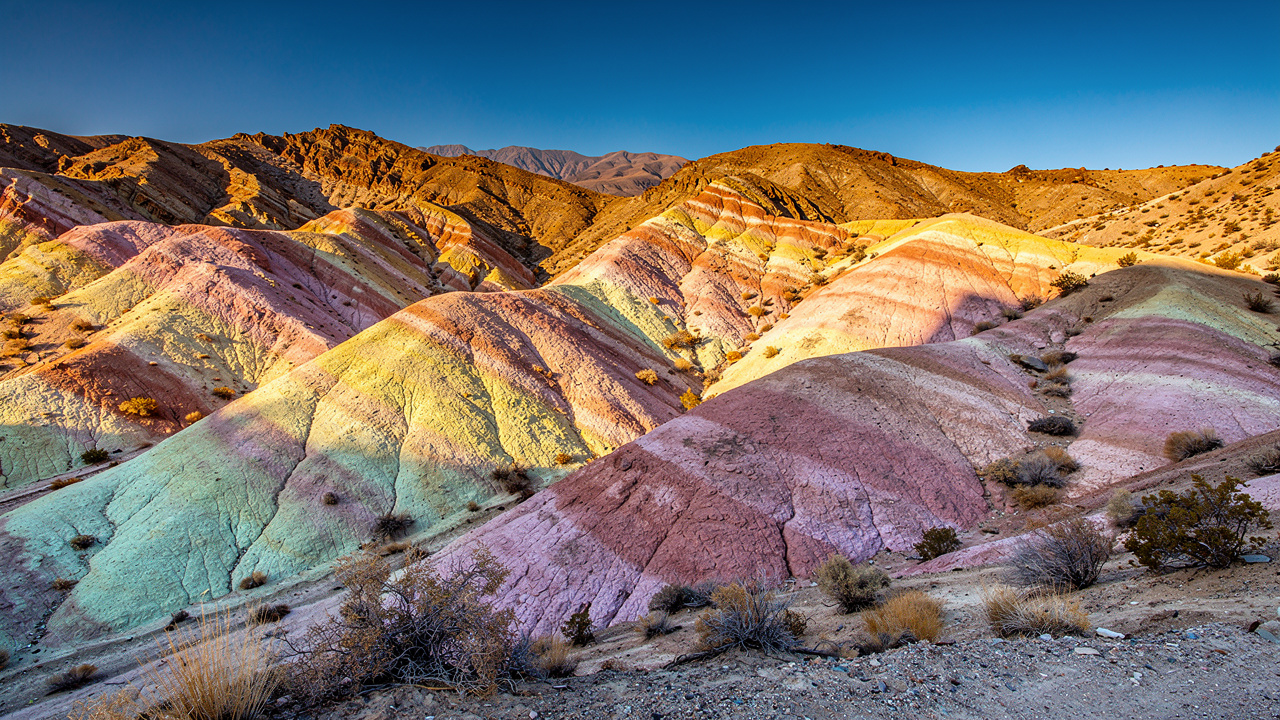
Artist’s Drive is a nine‑mile one‑way loop that feels like driving through a painting. The road twists and dips through hills stained with pastels and deep tones created by mineral oxidation, revealing nature’s palette in ways that transform landscapes into living art. The highlight is Artist’s Palette, where pink, green, yellow, and purple bands all meet in one intensely colorful bowl. Parking areas let you step out and walk into the hills for close‑up work. Late afternoon often shows the colors at their richest, as low sun pulls out every stripe and fold.
For creators building a Death Valley scenic drive montage, running this loop at different times of day can be smart. Early morning gives softer, cooler tones. Later light reveals warmer reds and deep purples. Close details of cracked clay, slanted layers, and color transitions play well in vertical video and macro shots.
Golden Canyon Trail, off Badwater Road, pulls you off the pavement and into a narrow, winding canyon. Tall golden walls rise on both sides, and sunlight bounces between them to create pools of warm, glowing shade. You can keep things simple with a short out‑and‑back walk or commit to a longer loop that reaches Red Cathedral and ties into the Zabriskie Point trailhead. Either way, the space is full of texture, leading lines, and natural frames.
The main CA‑190 highway also deserves time in any Death Valley National Park drive plan. Entering from the west, it snakes down from Towne Pass toward the valley floor in a series of bends that are perfect for driving shots and timelapses. Just beyond Panamint Springs, the road suddenly straightens into a long, ruler‑like line that cuts across a huge basin. A centered composition of a car or person on that stretch has become a classic image from desert road trips in the USA, and for good reason. It clearly shows the scale and emptiness of this place.
Panoramic Viewpoints: Death Valley From Above
To really understand how huge Death Valley is, you need to climb above it. The elevated viewpoints around the basin give sweeping scenes that tie together salt flats, ridges, and distant peaks in one frame. For a creator, these are the spots that deliver strong establishing shots for any video or photo set.
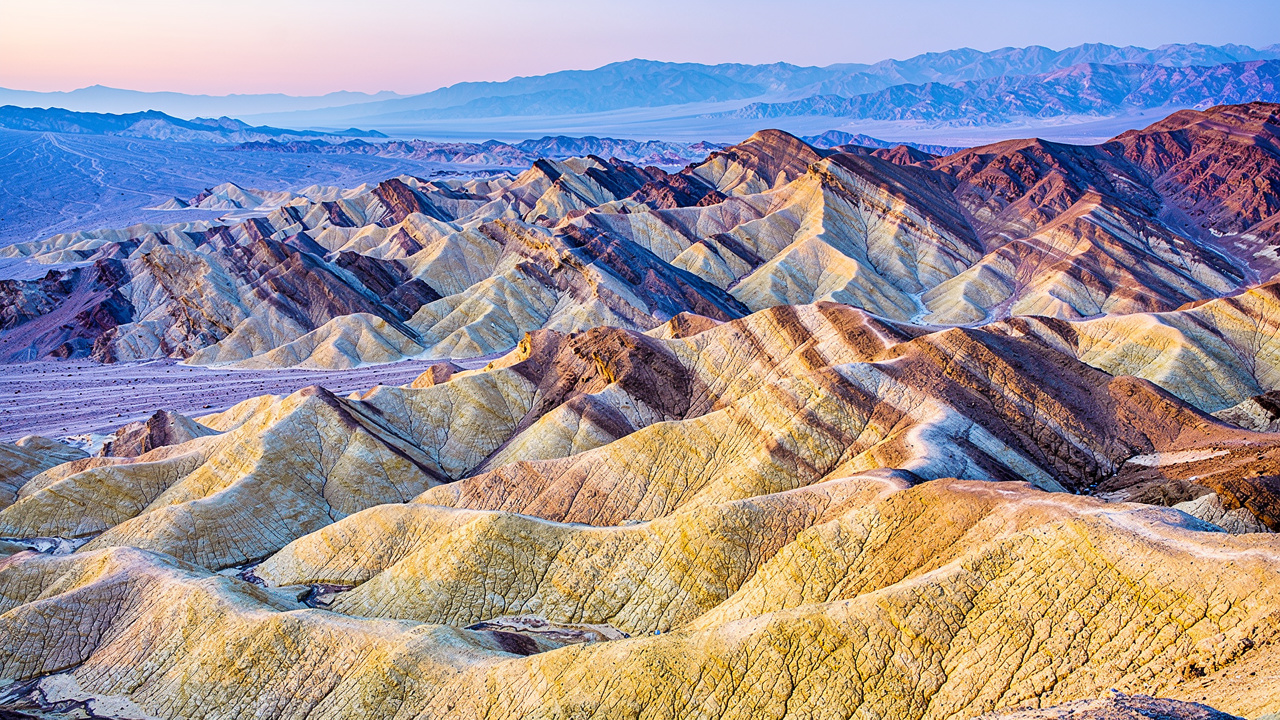
Zabriskie Point may be the most famous stop in the park. A short paved path climbs to a main viewpoint that overlooks a maze of golden badlands, sharp ridges, and carved gullies. At sunrise, the first rays catch the highest ridges while valleys remain in shadow, creating strong contrast. At sunset, the entire view warms into soft oranges and pinks that feel almost unreal. On clear, moonless nights, this same spot becomes a go‑to for Milky Way astrophotography as part of a longer Death Valley road trip.
Because Zabriskie Point is so well known, it can get crowded at peak times. Arriving well before sunrise often means better positions, quieter audio, and cleaner frames without people. Exploring a bit farther along the paths, while obeying signs and staying on durable surfaces, can reveal less‑used angles.
Dante’s View climbs far higher, to a lofty perch above Badwater Basin. From the parking area, you can look straight down onto the salt flats and across to the Panamint Range beyond. On very clear days, the zone between here and the Sierra Nevada lets you see both the lowest point in North America and Mount Whitney, the highest peak in the contiguous United States. Short paths along the ridge give options for foreground rocks, tiny human figures, or car shots framed against the valley below. The spot also carries a fun film connection, having been used in the original Star Wars as the overlook above the Mos Eisley spaceport.
Farther north, Ubehebe Crater showcases Death Valley’s volcanic side. The main pit is about half a mile across and 600 feet deep, formed by a powerful steam explosion when magma hit groundwater. From the parking lot on the rim, you can shoot straight down into the dark, loose cinders that line the walls. A loop trail around the rim gives changing perspectives, while a very steep path leads to the floor for creators who want a more immersive view. Just remember that climbing back out is strenuous, especially with gear.
Each of these viewpoints helps your audience grasp the scale of one of the most iconic road trips in America. Wide, layered compositions from above set the stage for the tighter scenes you capture on the valley floor.
Beyond The Main Loop: Hidden Adventures And Ghost Towns
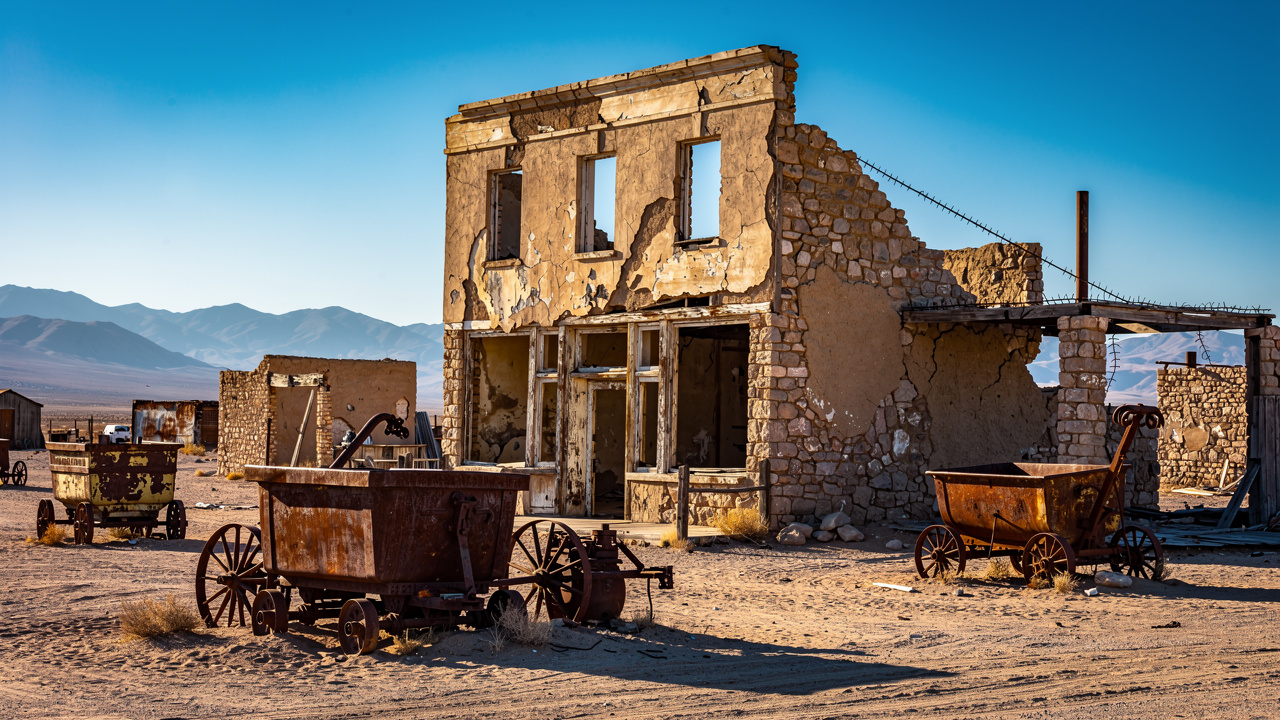
Most visitors stick to the central loop between Furnace Creek, Badwater, Mesquite Flat, and Zabriskie Point. That loop is amazing, but stepping just beyond it adds depth and surprise to any Death Valley travel guide you are building. Ghost towns, outdoor art, cool canyons, and even a waterfall all help your project stand out.
Just outside the park’s eastern edge near Beatty sits Rhyolite Ghost Town. In the early 1900s it was a booming gold‑rush community. Now, broken walls of a three‑story bank, the remains of a train depot, and the famous bottle house are all that remain. Shooting here feels like working on a ready‑made movie set. With the right angles, it is easy to build scenes that mix old stone, rusted metal, and open desert.
Next door, the Goldwell Open Air Museum adds an unexpected creative twist. Large outdoor sculptures, including a ghostly take on The Last Supper, stand against wide desert backdrops. For creators, this mix of art and raw desert works well in both still photos and looping video, especially in low golden light.
Beatty itself is a handy and character‑filled gateway town. It has gas, groceries, motels, and a small casino, all wrapped in a classic Nevada small‑town look. Including even a few shots here helps show the human side of a California desert road trip instead of only empty scenes.
On the park’s western side, Darwin Falls brings a complete change of mood. A short hike follows a small stream through a narrow canyon lined with willows and cottonwoods. At the end, a year‑round waterfall tumbles into a shady pool. The contrast between this green pocket and the dry rock outside makes for strong before‑and‑after storytelling, especially in video.
For more textured rock close‑ups, Mosaic Canyon near Stovepipe Wells offers polished marble‑like walls and sections where small stones are cemented together into natural mosaics. The four‑mile round trip can be adjusted to your time and energy, but even a shorter walk gives plenty of visual interest.
With a capable 4×4 and enough preparation, you can also look toward remote targets like the Racetrack Playa, famous for its “sailing stones.” Those tracks demand serious planning and careful driving, which is another area where Discover It Yourself vehicles and guidance really help.
Essential Safety And Logistics For Death Valley Explorers
Creating strong content here starts with staying safe. Death Valley is beautiful and harsh at the same time. Treating it with respect keeps a dream project from turning into an emergency. When planning iconic road trips in Death Valley or nearby regions, heat should be your first concern.
From late spring through early fall, avoid hard hikes and extended filming after about 10 a.m. Even in cooler months, heavy exertion in direct sun can drain you quicker than expected. Aim for at least one gallon of water per person per day as a base, and add more for hikes. A good rule is one liter for every two miles of walking. Watch for signs of heat stress in yourself and anyone with you, such as dizziness, headache, or confusion.
Fuel planning is almost as important as water. Gas is available at Furnace Creek, Stovepipe Wells, and Panamint Springs, but prices are high and distances are long. Topping off in Las Vegas, Pahrump, Beatty, or Lone Pine before you enter the park gives more breathing room. Running low on fuel deep in the desert, far from help, is more than an inconvenience — it can be dangerous during high heat or at night.
Navigation works best with a mix of tools:
- Download offline maps before leaving coverage
- Keep a printed park map in the car where you can grab it quickly
- Let a friend or family member know your rough route and check‑in time
- Be cautious on dirt roads, especially after storms or in summer heat
The environment here is fragile, much like glaciers’ contributions to ecosystems worldwide, where delicate natural systems require careful stewardship to maintain their integrity. Thin cryptobiotic soil and delicate desert plants can take decades to recover from a single set of boot prints or tire marks. Staying on marked trails and established roads protects the park and keeps your content ethical. Trash, including tiny things like tissue or snack wrappers, should go back out with you. Flash floods are another real risk in narrow canyons; if rain is in the forecast anywhere uphill, skip slot canyons for that day.
Park entrance fees can be paid at self‑service kiosks or at the Furnace Creek Visitor Center. Stopping at the visitor center early in your trip is a smart move. Rangers there can update you on road closures, weather patterns, and current conditions. With safety and logistics handled, you are free to concentrate on storytelling, framing, and capturing the feel of one of the best road trips California has to offer.
“Wilderness is not a luxury but a necessity of the human spirit.”
— Edward Abbey
How Discover It Yourself Shapes Your Death Valley Adventure
Most guided tours through Death Valley follow the same script. The bus stops, the guide talks, everyone gets ten minutes to snap photos, then it is back on the road. That model rarely lines up with how content creators like to work. Discover It Yourself was built for a different style of adventure, one where independence, privacy, and creative control come first.
The foundation is a fleet of premium 4×4 vehicles. These are not just for comfort. They are what let you reach remote tracks, rougher gravel roads, and lesser‑known overlooks that standard rental sedans should not attempt. That means access to spots near places like Titus Canyon, remote badlands, or dry lakebeds where tire tracks are rare and you can film in complete calm.
What really sets the experience apart is how information is shared. Instead of a guide talking over a microphone, you receive curated coordinates and route details ahead of time. Those points include famous Death Valley must‑see stops and a set of handpicked viewpoints and side roads around the Las Vegas region. You still make all the choices — which places to prioritize, how long to stay, and when to circle back all remain in your hands.
For creators, that freedom is gold. You can plan a Death Valley road trip that lines up with your content goals:
- Shoot a proposal at sunset far from crowds
- Build an anniversary film that moves from dunes to stars to campfire
- Spend quiet hours capturing time‑lapses without a group schedule pressing you
Because there is no guide and no group, you also keep full privacy. You can record voice‑overs on the spot, redo takes as often as needed, set up tripods without bumping elbows, and share personal moments without an audience. Discover It Yourself gives you the keys, the right vehicle, and insider information. The rest of the story belongs to you.
Conclusion
Death Valley is a place of extremes. It holds the record for hottest air temperature, drops to 282 feet below sea level at Badwater Basin, and covers more than three million acres. Those numbers are impressive, but for creators, what matters more is how this region feels. Empty highways, salt flats that seem endless, dunes that glow at sunset, and night skies thick with stars all combine into a setting that can feel otherworldly.
Few trips offer this much variety within an easy drive from Las Vegas. In roughly two hours, you can go from busy casinos to a quiet desert road trip in the USA where silence is the loudest sound. It works just as well for first‑time adventurers as it does for seasoned shooters building a new series or client project. A self‑guided approach lets you chase the kind of light and mood that fits your style instead of rushing from stop to stop.
As you drive, climb, and explore, the experience does more than fill memory cards. It sharpens how you see light and form. It pushes you to work with harsh conditions and fast‑changing color. It encourages a deeper connection with the American Southwest, far from crowded sidewalks and scripted attractions.
If your goal is to step away from repetitive tourist content and create something that feels true to your own voice, Death Valley is an ideal stage. With careful planning, respect for safety, and the right partner providing 4×4 capability and curated coordinates, your next road trip can be both an unforgettable adventure and a powerful creative project. When you are ready to trade neon for salt flats, Discover It Yourself is ready with the keys.
FAQs
What Is The Best Time Of Year For A Death Valley Road Trip?
The best window for a Death Valley road trip runs from October through April. During these months, daytime highs usually range from the 60s to low 80s Fahrenheit, which makes exploring and filming far more comfortable. March and April are especially appealing, since they may bring wildflower blooms after wet winters. From May to September, temperatures often exceed 120°F, limiting safe outdoor activity to early morning and late evening. Winter nights can turn cold, so pack layers.
How Long Does It Take To Drive From Las Vegas To Death Valley?
The drive from the Las Vegas Strip to the Furnace Creek Visitor Center is about 120 miles and usually takes around two hours without stops. That short distance makes Death Valley National Park ideal for weekend escapes and focused multi‑day content trips. If you add side visits to places like Rhyolite Ghost Town, Beatty, or other desert viewpoints, expect the drive to stretch longer in the best possible way. Plan extra time for photo stops, since the scenery becomes interesting long before the park entrance.
Do I Need A 4×4 Vehicle To Explore Death Valley?
You do not need a 4×4 to see the classic highlights. A standard car can reach Badwater Basin, Mesquite Flat Sand Dunes, Zabriskie Point, Dante’s View, and Artist’s Drive on paved roads. However, a high‑clearance 4×4 greatly expands your options. It allows safer access to rougher roads leading toward areas like the Racetrack Playa, Titus Canyon, and other remote zones that offer rare, crowd‑free scenes. Discover It Yourself specializes in premium 4×4 rentals paired with curated coordinates, which is ideal if you want to reach those out‑of‑the‑way spots. Some nearby unpaved routes, such as the road to Trona Pinnacles, can be driven in a standard SUV if you go slowly and watch road conditions.
What Should I Pack For A Death Valley Road Trip?
Start with safety essentials:
- At least one gallon of water per person per day
- Strong sunscreen, a wide‑brimmed hat, and UV‑blocking sunglasses
- Sturdy, closed‑toe shoes and light, breathable clothing
- A basic first‑aid kit, extra snacks, and a flashlight or headlamp
- Offline maps on your phone plus a paper map as backup
Creators will also want extra camera batteries, large memory cards, a lightweight tripod, and a small cleaning kit to handle dust and salt. Layered clothing helps you handle big temperature swings between hot afternoons and cool nights.
Where Should I Stay During My Death Valley Adventure?
For maximum golden‑hour access, staying inside the park near Furnace Creek, Stovepipe Wells, or Panamint Springs works best. Hotels at The Oasis at Death Valley and Stovepipe Wells provide comfort, power, and Wi‑Fi for editing, while nearby campgrounds offer the most direct access to night skies and dawn shoots. Gateway towns like Beatty, Lone Pine, and Death Valley Junction give more budget options and added amenities while adding their own local flavor. Whichever base you choose, book well ahead for peak season in March and April. Matching your lodging to your planned shooting zones will cut drive time and keep more of each day focused on creating.